Patterns in Reward Tier Escalations and Their Ties to Withdrawal Processing Speeds Across Cross-Border Digital Platforms
Digital platforms operating across borders have developed structured reward tiers that escalate based on user activity levels, and these tiers frequently connect directly to variations in withdrawal processing speeds. Data from multiple regions shows that higher tiers often receive expedited verification and fund release protocols while lower tiers encounter standard or extended timelines. Researchers tracking these systems note consistent correlations between tier advancement and reduced processing windows, particularly on platforms serving users in Europe, North America, and the Asia-Pacific region.
Structure of Reward Tiers and Activity-Based Escalation
Platforms establish tier systems that advance users through defined stages according to deposit volume, transaction frequency, and engagement metrics. Observers tracking cross-border operations report that advancement criteria typically include cumulative spending thresholds and account tenure, with automatic reviews occurring at set intervals. European operators, for instance, align tier progression with requirements outlined by bodies such as the Malta Gaming Authority, whereas platforms in Australia follow guidelines from the Australian Communications and Media Authority.
Escalation patterns reveal that users reaching intermediate tiers experience incremental improvements in account management features, including priority support channels. Those advancing further often qualify for customized withdrawal limits and dedicated processing queues. Studies examining platform data across multiple jurisdictions indicate that these escalations occur most rapidly during periods of sustained high activity, creating measurable differences in service delivery based on tier status.
Withdrawal Processing Variations by Tier Level
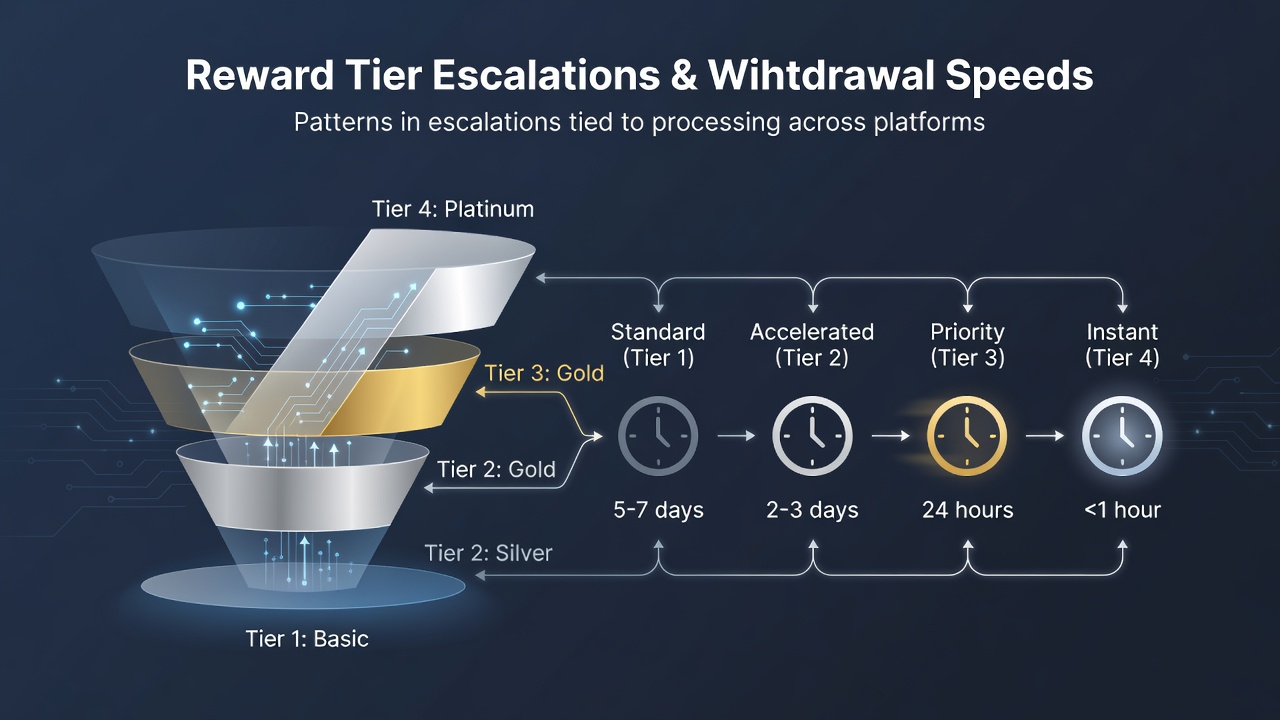
Withdrawal speeds diverge noticeably once users enter elevated reward tiers. Lower-tier accounts generally follow baseline processing schedules that incorporate standard identity checks and banking partner delays, while mid-to-upper tiers bypass certain verification steps through pre-approved status. Figures from industry reports compiled in 2025 demonstrate that top-tier users on cross-border platforms receive funds within 24 to 48 hours in many cases, whereas entry-level users wait three to five business days on average.
Cross-border factors add complexity because currency conversion, regional banking regulations, and intermediary financial institutions influence final delivery times. Platforms adjust internal workflows to accommodate these variables, yet tier status remains a primary determinant of queue priority. Canadian regulatory analyses and similar examinations in other markets confirm that expedited processing for higher tiers reduces user friction without altering underlying compliance requirements.
Observed Patterns in Escalation and Speed Correlations
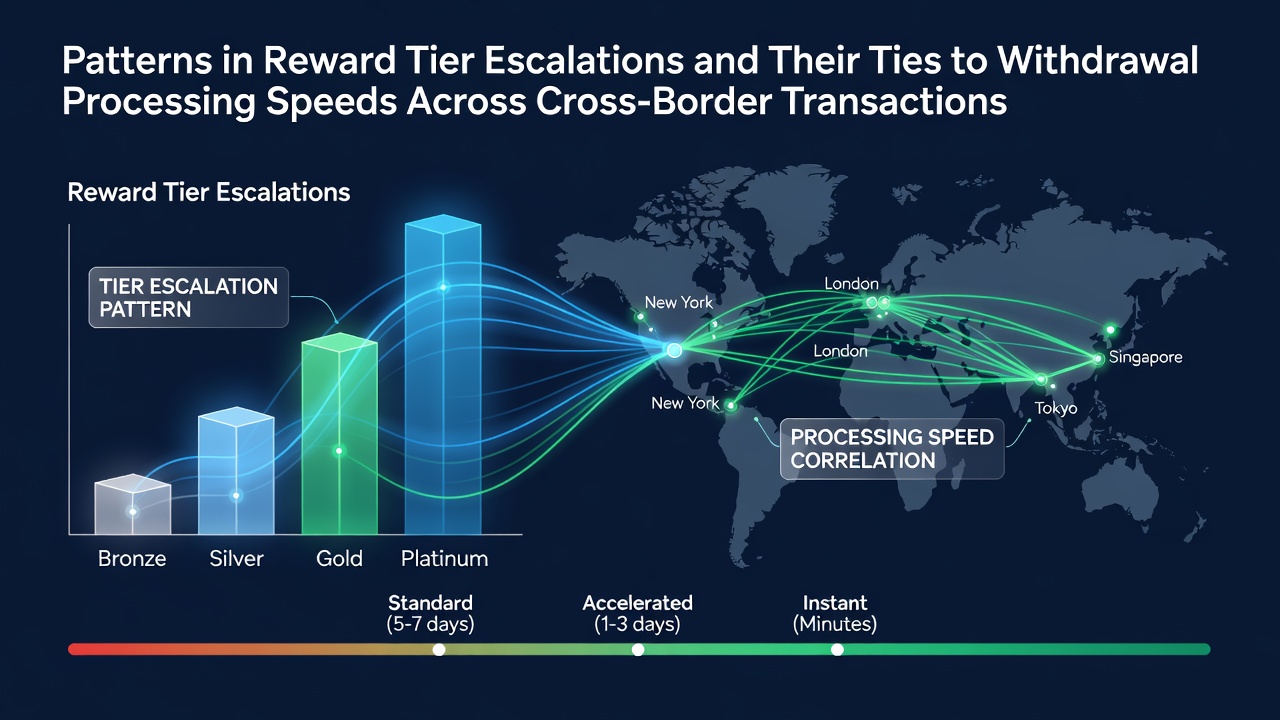
Longitudinal data collected from platforms active in multiple countries reveals recurring patterns where tier elevation precedes measurable reductions in withdrawal latency. One analysis covering operations from 2023 through mid-2026 found that users crossing into the second-highest tier experienced an average 40 percent decrease in processing duration. Similar trends appear when platforms integrate automated tier reviews with real-time transaction monitoring systems.
September 2026 updates to reporting standards in several jurisdictions are expected to require more granular disclosure of these tier-linked service differentials. Industry groups such as the European Gaming and Betting Association have compiled datasets showing that platforms maintaining transparent tier criteria tend to exhibit more predictable withdrawal timelines across user segments. These patterns hold across both established operators and newer market entrants operating under varying licensing frameworks.
Regional Differences and Platform Adaptations
North American platforms often tie tier benefits to state-specific gaming regulations, resulting in withdrawal speed variations that reflect local banking infrastructure. In contrast, operators serving European and Asian markets coordinate tier escalations with broader international payment networks to maintain consistency. Research institutions examining these adaptations note that platforms frequently recalibrate tier thresholds quarterly to align with seasonal activity fluctuations and regulatory shifts.
Cross-border users sometimes encounter additional documentation requirements that can temporarily offset tier advantages, yet pre-verified higher-tier accounts generally retain processing priority once initial hurdles clear. Data indicates that platforms investing in unified backend systems achieve more uniform speed improvements tied to tier status regardless of user location.
Conclusion
Patterns linking reward tier escalations to withdrawal processing speeds continue to shape service delivery on cross-border digital platforms. Available data from regulatory and industry sources demonstrates consistent relationships between tier advancement and reduced processing times, with regional adaptations reflecting local compliance environments. As reporting standards evolve in September 2026 and beyond, these correlations are likely to remain central to platform operations and user experience metrics across jurisdictions.