
How Regional Banking Regulations Shape Self-Limiting Tools in Digital Blackjack Communities
Banking regulations across different jurisdictions directly influence the design and availability of self-limiting tools in digital blackjack platforms, from deposit caps to session timers that players activate through app settings. These rules govern how payment processors handle transactions, which in turn dictates what features developers can integrate without violating local financial laws.
Regulatory Variations Across Major Markets
Payment service directives in the European Union require banks to monitor high-volume transfers, and this framework pushes operators to embed voluntary spending limits into blackjack apps so that users stay within monitored thresholds. Meanwhile, state-level rules in the United States create a patchwork where some jurisdictions tie banking approvals to responsible play mechanisms, forcing platforms to offer real-time alerts when players approach their chosen caps.
Australian banking codes emphasize transaction transparency, and companies there have responded by linking account-level controls directly to gaming wallets, which means blackjack communities often see automated reminders tied to daily or weekly transfer limits. In Canada, provincial oversight of financial institutions encourages similar integrations, with operators embedding time-based pauses that sync with banking schedules to prevent rapid successive deposits.
Technical Implementation of Self-Limiting Features
Developers build these tools by connecting app interfaces to banking APIs that flag certain transaction patterns, and the result is a set of player-activated options such as maximum bet sizes per round or enforced cooling-off periods after reaching a set loss amount. Data from payment networks shows that regions with stricter transfer verification see higher adoption rates of these controls because users encounter them during the initial funding process.
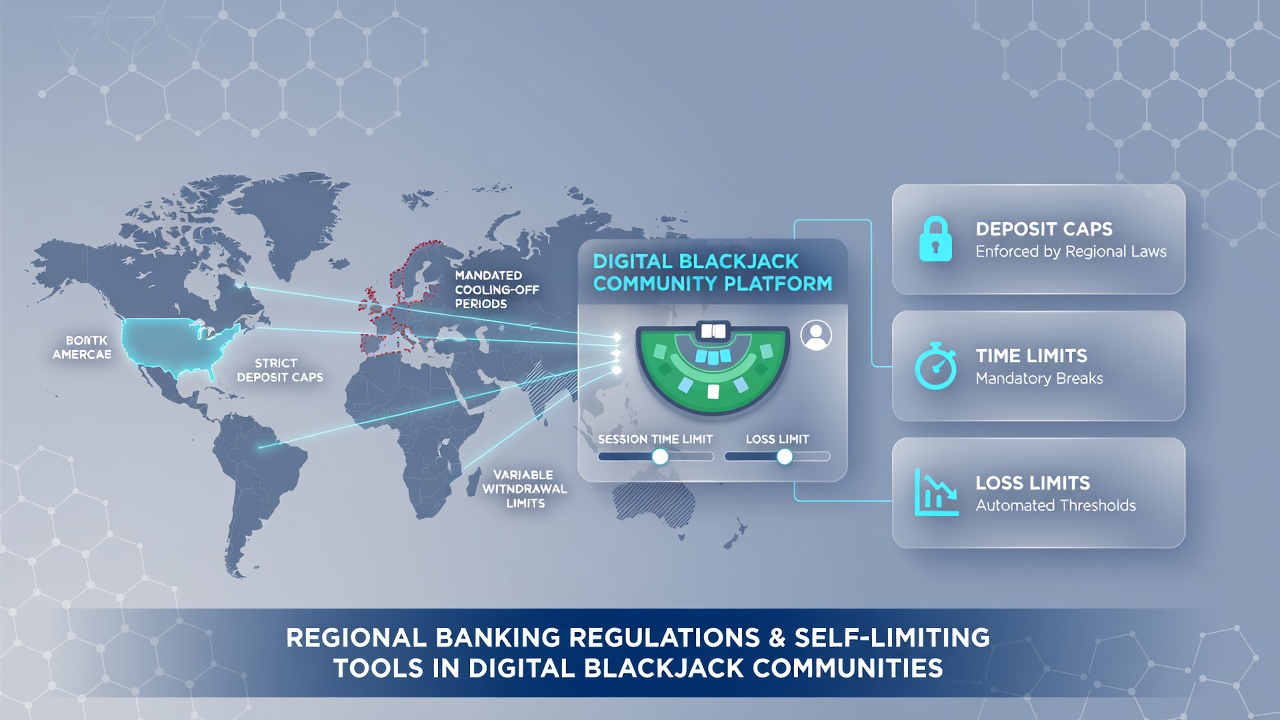
One study revealed that platforms operating under multiple regulatory regimes often maintain separate backend modules for each market, allowing a single app to display customized limit sliders based on the user's registered location adn linked bank. This modular approach keeps compliance costs manageable while giving players in stricter zones more granular options for setting personal boundaries during extended sessions.
Developments Observed in October 2026
Updates to cross-border payment standards that took effect in October 2026 prompted several operators to expand self-exclusion linkages with banking partners, particularly in markets where regulators now require proof of player-set thresholds before processing large transfers. Observers note that blackjack communities in those areas reported smoother integration of these tools, since the new rules aligned existing app features with updated verification flows.
Researchers discovered that adoption of session-limit toggles increased noticeably after these changes, especially among users whose banks began displaying regulatory notices at the point of transfer. Figures from industry reports indicate that platforms in compliant regions processed fewer disputed transactions once the tools became standard, because players had clearer options to pause activity before issues escalated.
Community Responses and Platform Adaptations
Digital blackjack groups frequently share configuration guides that match local banking requirements, and those discussions highlight how certain features only appear for accounts tied to specific financial institutions. Take one researcher who examined adoption patterns and found that users in tightly regulated banking environments activated deposit caps at roughly twice the rate of those in less restrictive zones.
Industry organizations have documented cases where operators adjusted interface layouts to surface limit tools earlier in the funding sequence, and this shift aligns with banking mandates that prioritize consumer safeguards during digital transfers. What's interesting is that these adaptations often occur without altering core gameplay, keeping the focus on blackjack mechanics while the regulatory layer operates in the background.
Conclusion
Regional banking regulations continue to drive the evolution of self-limiting tools in digital blackjack communities by dictating how and when players can access controls tied to their financial accounts. As payment frameworks evolve, platforms maintain compliance through modular designs that deliver location-specific options, and data indicates these measures integrate more seamlessly where banking rules already emphasize transaction monitoring. The pattern shows consistent alignment between financial oversight and player tools across examined markets.