How Interface Designs Shape Session Lengths in Portable Poker and Roulette Setups
Interface designs in portable poker and roulette applications influence how long players remain engaged during individual sessions, and data from multiple studies tracks these patterns across different platforms. Researchers have observed that elements such as button placement, animation timing, and navigation flow contribute to extended or shortened play periods, while platform developers adjust layouts based on usage metrics collected through 2025 and into August 2026. Observers note that portable setups often prioritize one-handed operation, which reduces physical barriers and allows continuous interaction without frequent breaks.
Core Design Elements Affecting Engagement
Button sizes and touch targets in roulette wheels and poker tables determine how quickly users can place bets or fold hands, and studies show that larger, well-spaced controls correlate with fewer interruptions. When interfaces incorporate swipe gestures for chip selection or card reveals, session data indicates smoother transitions between rounds that keep players active longer. Color schemes and contrast levels also play a role, since high-visibility elements guide attention toward active betting areas and away from exit options. Experts tracking mobile gambling trends report that auto-deal features in poker, combined with minimal confirmation screens, shorten the time between hands and extend overall session duration by measurable margins.
Animation sequences for spinning roulette wheels or card shuffles create rhythmic pacing that aligns with natural decision-making intervals, and figures from industry reports reveal these elements maintain user focus during extended periods. Portable applications that preload outcomes or cache game states further minimize loading delays, which data shows prevents users from disengaging mid-session. Those who analyze user behavior logs find that subtle progress indicators, such as streak counters or pot size displays, encourage continued participation rather than immediate exits.
Data Patterns Across Platforms
Research compiled by the University of Nevada Reno's gaming studies program demonstrates that session lengths in portable roulette increase when interfaces include quick-bet presets and persistent balance displays. Similar patterns appear in poker applications where multi-table views allow simultaneous participation, and metrics collected through 2026 show average session times rising in correlation with these layout choices. Canadian regulatory analyses from the Alcohol and Gaming Commission of Ontario indicate that notification systems prompting users back into active games after brief pauses contribute to longer cumulative play windows across multiple short sessions.
European data sources, including reports from the Netherlands Gambling Authority, track how adaptive interfaces that resize elements based on screen orientation affect retention rates during travel or commuting periods. When applications reduce menu depth and surface core actions directly on the main screen, logs reveal fewer voluntary exits and higher continuity between rounds. What's interesting is that these adjustments appear consistently across different device models, suggesting design principles rather than hardware variations drive the observed differences.
Comparative Influence in Poker Versus Roulette
Poker interfaces often feature community card animations and chat overlays that foster social continuity, and researchers note these elements sustain attention across multiple hands even when individual results vary. Roulette setups, by contrast, emphasize wheel physics simulations and betting history panels that allow rapid pattern recognition, which some session analyses link to prolonged engagement through repeated spin cycles. Both formats benefit from dark mode options that reduce eye strain during nighttime use, and aggregate figures indicate this accessibility feature extends average play windows on portable devices.
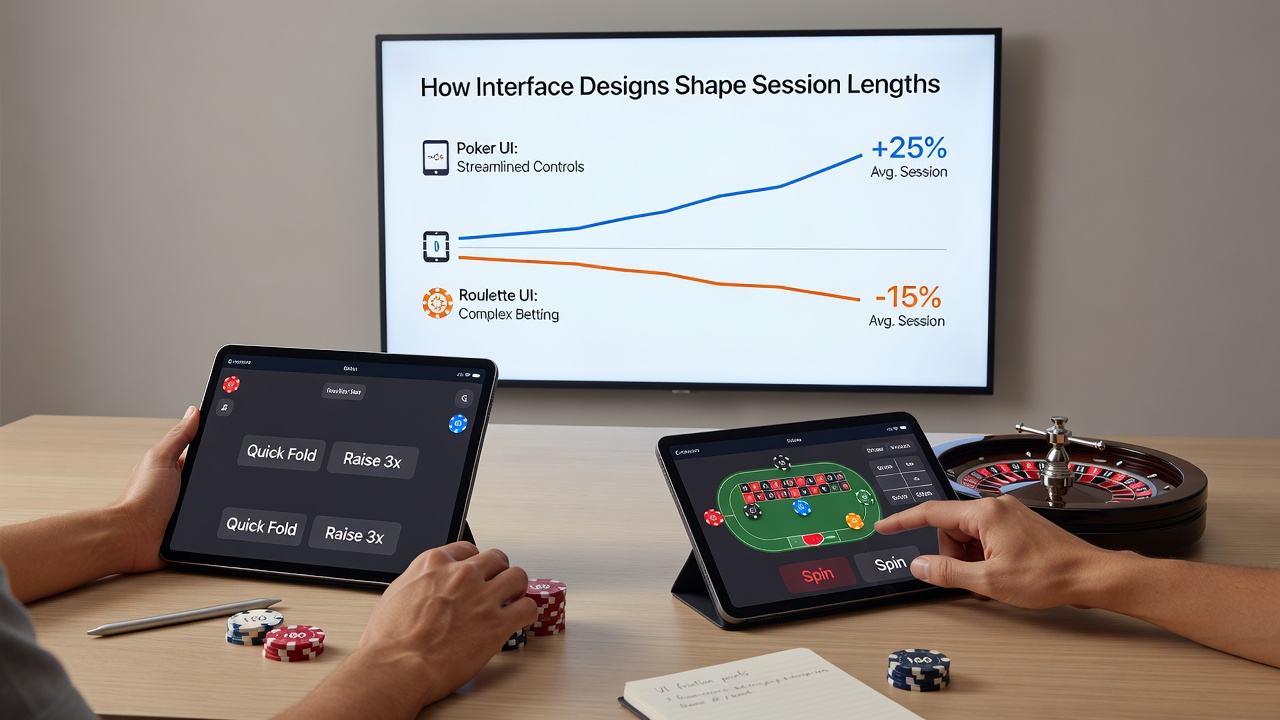
Designers frequently test variations in confirmation pop-ups for large bets, and evidence suggests that streamlined single-tap approvals versus multi-step verifications produce different session length outcomes. Portable poker applications that integrate real-time opponent statistics directly into the table view maintain player immersion, whereas separate statistic screens tend to create natural break points. Roulette designs that highlight hot and cold number zones through dynamic highlighting similarly guide continued betting activity, according to behavioral datasets gathered from multiple operators.
Regulatory and Industry Observations Through 2026
Industry organizations such as the European Gaming and Betting Association have documented how interface standardization efforts influence session metrics across regions, with particular attention to responsible play tools embedded within game flows. As of August 2026, updates to portable platforms incorporate session time reminders that appear after preset intervals, and preliminary data tracks their effect on voluntary exits without disrupting core gameplay continuity. Academic papers from institutions including the University of Sydney's gambling research unit examine how micro-interactions like haptic feedback during wins or losses alter perceived session pace and subsequent decisions to continue.
These findings align with broader patterns observed in mobile application analytics, where friction points introduced through additional taps or loading sequences consistently correspond to shorter play periods. Conversely, interfaces that anticipate user intent through predictive betting suggestions or remembered preferences show elevated retention across both poker and roulette formats. Observers tracking these developments note that cross-platform consistency in design language further supports sustained engagement when users switch between devices.
Conclusion
Interface designs in portable poker and roulette applications continue to evolve based on session length data collected from diverse user groups, and researchers continue monitoring how specific layout choices shape engagement patterns. Elements ranging from touch target sizing to animation pacing and notification integration each contribute measurable effects, while industry reports and academic studies provide ongoing insights into these relationships. As portable platforms advance through 2026 and beyond, design decisions remain central to understanding session dynamics across both game types.