
Digital Currency Trails: Securing Transactions While Promoting Measured Play in Mobile Table Games
Digital currencies have carved out a distinct role in mobile table games where transaction security and player pacing intersect through detailed blockchain records that create verifiable trails for every exchange, and observers note these systems rely on distributed ledgers to encrypt and timestamp each transfer so that mobile blackjack or poker sessions maintain integrity across devices and networks.
Research from academic institutions shows that cryptographic hashing combined with consensus mechanisms prevents alteration of payment histories while allowing operators to verify compliance without exposing sensitive user details, and data from industry reports indicates transaction confirmation times have dropped below ten seconds in many platforms by August 2026.
Blockchain Records and Transaction Integrity
Transaction trails in digital currency environments function as immutable sequences that link each deposit or withdrawal to a unique wallet address and game event, which means regulators and platforms can audit activity for anomalies such as rapid repeated transfers that might signal irregular patterns, whereas traditional payment rails often require separate reconciliation steps that add latency.
Those who study financial technology in gaming environments point out that smart contracts automate payout conditions so that winnings transfer only after predefined rules confirm a hand outcome, and this automation reduces manual intervention while preserving a complete audit log that spans from the initial mobile app login through final settlement.
Integrating Security Features with Pacing Tools
Measured play features appear alongside these currency systems through built-in limits on session duration and wager frequency that platforms enforce via the same ledger data, which allows users to set personal thresholds that the system then tracks automatically and pauses activity once those thresholds trigger, and studies from research bodies indicate such integrations correlate with steadier engagement patterns across user cohorts.
One example involves mobile roulette applications that embed real-time balance displays tied directly to wallet activity so players receive immediate feedback on expenditure rates without leaving the game interface, while operators use aggregated anonymized trail data to identify broader trends in play velocity and adjust responsible gaming prompts accordingly.
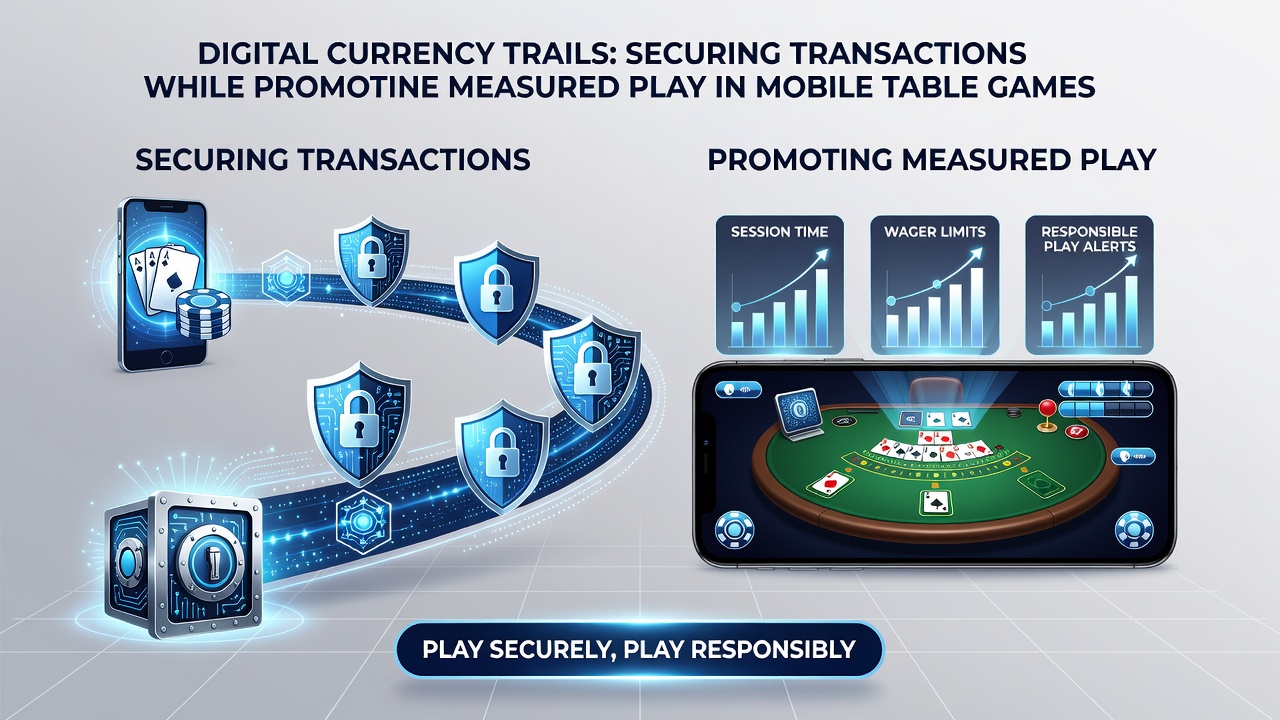
What's notable is how these combined mechanisms address both security and pacing without requiring separate applications, and figures from gaming association analyses reveal that platforms adopting unified digital currency frameworks report fewer disputes over transaction accuracy because every step remains visible on the shared ledger.
Regulatory Developments and Cross-Border Considerations
By August 2026 several jurisdictions outside the UK have updated guidelines to accommodate digital currency use in mobile table games, with agencies in North America and parts of Europe requiring operators to maintain accessible trail records for at least five years so that compliance checks can occur efficiently, and industry organizations emphasize that these requirements align with existing anti-money laundering protocols already applied to other payment types.
Academic papers on distributed ledger applications in entertainment sectors document how zero-knowledge proofs let platforms demonstrate adherence to spending limits without revealing individual player identities, which satisfies privacy expectations while still permitting oversight bodies to confirm that measured play protocols function as intended across international user bases.
Take one analysis released through a Canadian research consortium that examined transaction volumes in provinces where digital currency options expanded, and the findings showed that integrated limit-setting tools reduced average session lengths by measurable percentages when paired with transparent wallet histories, whereas regions without such pairings experienced wider variance in play intensity.
Technical Implementation Across Mobile Platforms
Developers achieve these outcomes by embedding wallet connectivity directly into game engines so that every table action generates a corresponding ledger entry, and this approach eliminates the need for external payment redirects that once interrupted gameplay flow, while multi-signature wallet setups add another layer that requires both player and operator confirmation before large transfers complete.
Those who've examined mobile security audits note that end-to-end encryption wraps these trails so that even if a device is compromised the historical record remains protected on the blockchain, and network nodes distributed across regions provide redundancy that keeps transaction verification operational during localized outages.
Conclusion
Digital currency trails therefore serve dual purposes in mobile table games by delivering verifiable security for every financial movement and supplying the data backbone that supports measured play controls, and continued refinement of these systems through collaboration between technology providers and oversight entities points toward further standardization that maintains transparency without compromising user experience or jurisdictional requirements.